 Join Now
 Donate
 Take Action
Reports & Research
Our reports and research are helping community leaders all over America build an inclusive green economy. Check them out, below! If you know of something that should be listed here, please contact us.
NEW! Clean Water, Strong Communities White Paper
 This white paper focuses on one of the most promising strategies water utilities can use to develop broad public support
MPower Toolkit
 MPower delivers water and energy cost savings to multifamily affordable housing tenants and building owners, creating local economic opportunities while reducing carbon pollution and resource waste.
NEW! Raising Capital from the Community: Alternative Capital Development through Crowdfunding
 Green For All created this report to serve as a resource for entrepreneurs interested in exploring crowdfunding as way to grow businesses that make their communities and our country stronger, healthier, and more inclusive.
On-Bill Programs that Advance Multifamily Energy Efficiency
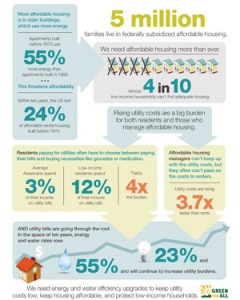 Green For All and the National Housing Trust have compiled case studies of on-bill programs that serve the multifamily sector, and with them highlight program and policy attributes that enable successful on-bill programs.
SEEING GREEN: Green Infrastructure Maintenance Training and Workforce Development Opportunities in Northeast Ohio
 Seeing Green reveals that 219 jobs and economic activity in the range of $23 million will be created by Northeast Ohio Regional Sewer District’s (NEORSD) green infrastructure investments.
Staying Green and Growing Jobs: Green Infrastructure Operations and Maintenance as Career Pathway Stepping Stones
 The operations and maintenance of green infrastructure represents a significant opportunity to create entry-level jobs in the green sector for individuals from disadvantaged communities.
Staying Green: Strategies to Improve Operations and Maintenance of Green Infrastructure in the Chesapeake Bay Watershed
 As more communities move towards adopting green infrastructure as a cost-effective approach to manage polluted runoff, it is critical that local governments address barriers to operations and maintenance.
Green Stormwater Jobs
 This tool is a resource for all stakeholders promoting the use of green infrastructure using a jobs framework. Find persuasive data points and effective communication strategies to persuade decision makers to increase green infrastructure investments.
Job Projection and Tracking Guide
 This guide is a resource for agencies and other organizations responsible for overseeing green infrastructure projects, and it highlights the fundamental importance of using sound and persuasive data to foster investment in green jobs. It also calls on agencies that invest in green infrastructure to increase their efforts to track project job outcomes.
High Road Agreements: A Best Practice Brief By Green For All
 High Road Standards ensure that green projects, like citywide energy efficiency upgrades and water infrastructure repair—create real opportunities for the people who need them most.
This is a step-by-step guide for businesses and agencies that want to adopt High Road Agreements…
Nonprofit Social Enterprise: Models and Funding
 Leaders in the non-profit community are increasingly embracing social enterprise models in order to create opportunity in the green economy. Their growing use of market-based strategies is driven both by of the success of socially responsible business models and by the recent downturn in philanthropic funding. Green For All’s brief, “Nonprofit Social Enterprise: Models and Funding” provides an introduction…
Water Works: Rebuilding Infrastructure, Creating Jobs, Greening the Environment
 This report estimates the economic and job creation impact of a major investment in water infrastructure in the United States. This number—$188.4 billion—is based on the level of investment necessary, as estimated by the Environmental Protection Agency, to manage stormwater and preserve water quality across the country. We find that an investment of $188.4 billion spread equally over the next five years would generate $265.6 billion in economic activity and create close to 1.9 million jobs. Read more…
Best Practices in Green Re-Entry Strategies
 Green For All thanks the 2010 Pathways Out of Poverty Re-entry Working Group for their contributions to the development and production of this report. Find out about the Working Group members’ leading programs that realize the strategies we present to successfully transition workers from incarceration, back into the workforce.
Toolkit for Residential Energy Efficiency Upgrade Programs
 Green For All created this Toolkit for Residential Energy Efficiency Upgrade Programs. The Toolkit offers examples, tools and templates that a program manager might use to implement an aspect of their program, from generating demand, to reaching the largest consumer market possible through innovative finance mechanisms, to building job standards into programs that result in family supporting jobs.
Doing Business with the Federal Government: The Basics
 The Federal government spends more than $500 billion in contracting dollars every year. U.S. law currently establishes a goal that 23% of prime Federal contract dollars go to small businesses, and yet, it has fallen short of this goal for the past several years. Small businesses need to take better advantage of the Federal market place.
Green Jobs in a Sustainable Food System
 THE U.S. FOOD SECTOR is among the most productive in the world and is a significant driver of our economy. Yet, it’s failing us in major ways – putting public health, livelihoods and our environment at great risk. Obesity and diabetes rates are rising, communities are plagued by food deserts, and agriculture runoff is the biggest source of pollution in our rivers and lakes. This report examines the five sectors within the food system: Production, Processing, Distribution, Retail, and Waste.
High Road Outcomes in Portland’s Energy Efficiency Upgrade Pilot
 In Portland, Oregon Green For All has been helping implement Recovery Act-funded programs that create high-quality jobs for people who really need them. With a clear-eyed commitment to high-road outcomes Portland has leveraged the collective expertise of its community to produce results.
EPA Protections Put People to Work
 Gotta love that clean air! Sure, it allows us to breathe well—but the work to protect the public from pollution also creates jobs! A new Ceres report finds that implementing two new air pollution rules proposed by the Environmental Protection Agency will create 1.5 million jobs over the next five years.
NEW REPORT: Jobs in California’s Green Economy Grew Three Times Faster than Jobs in Total Economy
 Data in this new report show that jobs in California’s green economy are growing more than three times faster than jobs in the total economy. The Core Green Economy now accounts for 174,000 jobs in California and has a growth rate similar to that of software jobs since 2005.
Bridging the Equity Gap: Driving Community Health Outcomes Through the Green Jobs Movement
 In Bridging the Equity Gap: Driving Community Health Outcomes Through the Green Jobs Movement, Green For All makes the case that the Green Jobs Movement can bring about a systems change to improve economic, environmental and health conditions for low-income communities.
Expanding Opportunity: Employing the Formerly Incarcerated in the Green Economy
 This reports provides information to enable efficient and equitable hiring of people with criminal records using Weatherization Assistance Program (WAP) funds.
Increasing Demand for Home Retrofits: Community-Based Outreach and Mobilization
 This best practice brief outlines the benefits of and strategies behind using community-based outreach and mobilization to generate demand for home energy retrofits.
Clean Water For All: Protecting Life’s Resource
 This colorful, educational water brochure can be used for organizing, trainings, workshops or tabling. You can use it to inform people about our water system and inspire them to take personal and collective action. Download the “Print-and-Fold” version to pass out. Also download the “Facilitator’s Guide” for more suggestions on how to use the brochure.
Green Gab: A Glossary of Terms used in Green Business
 This glossary provides useful definitions for many of the terminology and buzzwords frequently used within the green industry. This guide serves as an introductory resource for anyone new to the intersection of sustainability and social justice, as well as for those who lack an exhaustive understanding of commonly used jargon.
Where To Get the Green: Sources of Funds for Green Entrepreneurs
 Many people struggle to figure out how they can obtain the capital required to start and/or scale a business. This guide may not offer all of the answers, but it does provide helpful insights into a wide variety of financing options available to aspiring entrepreneurs as well as existing small business owners.
10 Green Business Ideas for New Entrepreneurs
 Many people see solar panels and wind turbines, and wonder how they are supposed to engage the green business economy. This guide outlines ten accessible business ideas that can be pursued by just about anyone, including those that are capital constrained.
Going Green: A Guide to Greening Your Business
 This guide is for the small business owner who is interested in reducing the environmental footprint of his/her company’s operations, and provides specific recommendations and resources for those who want to go green — and save money by doing so.
The Green Business Plan Guide
 While there is an abundance of resources focused on how to write a business plan, virtually none of the publications that exist today detail how to include environmental and social justice concerns. This guide attempts to explain how someone focused on the triple bottom line — profit, planet, and people — goes about writing a business plan for a truly green business.
Greener Skills: How Credentials Create Value in the Clean Energy Economy
 Even as this report delineates prominent national credentials in selected clean energy sectors, its purpose is larger: to suggest a more rational framework for human capital development in a greening economy.
An Industry at the Crossroads: Energy Efficiency Employment in Massachusetts
 The United states building energy efficiency market is projected to double in size over the next 20 years. Massachusetts, a national leader in this field, has already earmarked $1.4 billion to create thousands of jobs in the construction sector retrofitting more than 100,000 residential units and 20,000 commercial and municipal structures over the next three years.
Clean Energy Works Portland Report
 Green For All’s report details why Clean Energy Works Portland has such special appeal. The program includes a revolving loan fund with innovative “on-bill financing” and a Community Workforce Agreement that creates jobs in the communities that need them most.
Two new studies: climate legislation and job creation go hand-in-hand.
 Two new studies find that clean-energy legislation has great potential to create jobs and decrease energy bills, particularly with significant investments in energy-efficiency.
Understanding the Weatherization Assistance Program
 This document offers a basic understanding of the U.S. Department of Energy’s Weatherization Assistance Program and guidance on how to produce the best results possible.
Understanding the State Energy Program – from Green For All
 This document offers a basic understanding of the U.S. Department of Energy’s State Energy Program and guidance on how to produce the best results possible.
Construction Apprenticeship Programs: Career Training for California’s Recovery
 The Center on Policy Initiatives has released a report linking quality apprenticeship programs in the building trades to the future of California’s green economy and economic recovery. The report demonstrates that apprenticeship training is most effective when run collaboratively by labor and management.
Understanding the Competitive Grants for Green Jobs Training
 Green For All has prepared a pamphlet about the U.S. Department of Labor’s $500 million in Competitive Grants for Green Jobs Training, which are new under the Recovery Act. The pamphlet is meant as a resource for policy advocates, policy makers, employers, individuals, and applicants. It includes key information about each grant program, recommendations for how grantees can best implement these grants, and tips for writing grant proposals.
Business Guide to the Recovery
 The purpose of this guide is to help businesses and nonprofits navigate the American Recovery and Reinvestment Act (ARRA). While the federal government has shown great initiative in passing ARRA, it is the private sector that will sustain our economic stability. This guide identifies opportunities to leverage ARRA investments to bring the green economy to scale, both nationally and in America’s most vulnerable communities.
Green Prosperity: How Clean-Energy Policies Can Fight Poverty and Raise Living Standards in the United States
 “Green Prosperity: How Clean-Energy Policies Can Fight Poverty and Raise Living Standards in the United States”, is a new report from the Political Economy Research Institute at the University of Massachusetts, Amherst (PERI), commissioned by Green For All and NRDC.
Understanding the Energy Efficiency and Conservation Block Grant Program
 A guide to understanding the Energy Efficiency and Conservation Block Grant Program.
A Short Guide to Setting Up a City Scale Retrofit Program
 This guide by Green For All and COWS provides a model for designing and implementing weatherization and retrofitting programs on a citywide scale, with a goal of making such retrofits available to all and realize their potential to address climate change, put people to work, and reduce our energy bills.
Federal Resources to Enhance and Sustain Green Pathways Out of Poverty Programs
 This guide includes a short list of federal discretionary funding resources (mostly that existed before the Recovery Act) that may support a diverse array of services and activities for participants in green jobs training programs. This list is not meant to be exhaustive but to encourage broad and creative thinking about strategic planning for the financing and sustainability of green pathway out of poverty programs.
Green Pathways Out of Poverty: Workforce Development Initiatives
 Workforce development practitioners face a set of common questions about services, partnerships, curriculum, certifications, links to employers, funding and measuring their results. Green For All convened a working group of training providers focused on providing green pathways out of poverty to start developing answers to these shared questions. This document is a product of that convening and identifies five keys to success for green workforce development. These keys, when combined with effective leadership and staff, help these programs serve the workers the programs train, the businesses and industry they support, and the environment they aim to protect.
Green Jobs/Green Homes New York
 A new report from the Center for American Progress, the Center for Working Families, and Half in Ten shows how innovative public policy can transform the market for home energy efficiency, create tens of thousands of new clean-energy jobs, and leverage billions in private capital to revitalize the housing sector.
Green Cities: a Living Cities Report
 “Green Cities: How Urban Sustainability Efforts Can and Must Drive America’s Climate Change Policies.” This report is an effort by Living Cities to showcase and support the innovative ways in which cities are creating an equitable green economy.
Report: Race and Recession
 Race and Recession: How Inequity Rigged the Economy and how to Change the Rules tells the stories of people of color who are disproportionately affected by the recession. It uncovers root causes of long-term racial inequities that fed into the economic crisis. It proposes structural solutions to change a system that threatens future generations.
A Growing Green Economy: Opportunities of Tomorrow
 This report provides an overview of the current research on the green economy, including jobs, industries, and market outlook, with a particular focus on opportunities and obstacles in the Puget Sound region.
Going Green: The Vital Role of Community Colleges in Building a Sustainable Future and a Green Workforce
 This report details the ways in which community colleges are becoming living-learning classrooms to prepare workers for new or altered jobs in the clean-energy economy and to make campuses themselves more environmentally friendly.
ASES Green Collar Jobs report forecasts 37 million jobs from renewable energy and energy efficiency in U.S. by 2030
 ASES / MISI study reveals opportunities, warnings in nation’s first update of groundbreaking study; hottest sectors: solar, wind, biofuels, fuel cells
Green For All 2008 Annual Report
 Green For All accomplished so much in its first 12 months! We are honored to share it with you here in the form of our first annual report. In this document you can read about how we are realizing the dream of an inclusive green economy.
Green Jobs Guidebook
 New environmental and energy laws and policies will create of tens of thousands of new jobs in California. This guide from the Environmental Defense Fund provides: profiles of 200 green jobs currently in California; details on 45 job types for high school grads, many paying over $25 per hour; information on job training and placement programs; and listings of valuable apprenticeship programs.
Uncle Sam’s Rusty Toolkit
 The advent of the Obama Administration presents an opportunity to reform federal economic development policy using innovations that have been pioneered at the state and local levels. Goods Jobs First provides a framework for that process in a new report called Uncle Sam’s Rusty Toolkit, which is being released together with the AFL-CIO, Change to Win, Green for All, the National Employment Law Project, and the Partnership for Working Families.
Change for America

The Center for American Progress Action Fund, along with New Democracy Project, has released Change for America: A Progressive Blueprint for the 44th President, to help guide the presidential transition process and steer the government in a new, more progressive direction.
Global Green Jobs
 This article, published in Foreign Policy in Focus, describes how to frame green-collar jobs on the national and international level to contradict the “jobs vs. the environment” mentality and promote the principle that we need to build a green economy strong and equitable enough to lift people out of poverty and into prosperity.
Greener Pathways: Jobs and Workforce Development in the Clean Energy Economy
 This new report details current economic and workforce development opportunities in three leading industries: energy efficiency, wind, and biofuels. It talks about the specific kinds of jobs in the clean energy economy, the skills needed to fill these jobs, and how existing businesses and their workers can move to the center of the clean energy economy. The report also examines federal resources that can support state green jobs initiatives, and concludes by outlining a plan of action for state policymakers.
An Analysis of the Capacity of Green Businesses to Provide High Quality Jobs for Men and Women with Barriers to Employment: A Case Study of Berkeley, California, by Raquel Pinderhughes.
 This unique study involved extensive interviews with green-collar employers in the San Francisco Bay Area. The report explores the potential for green collar jobs to provide low-income men and women with high-quality, community serving jobs in the fast expanding green sector. The City of Berkeley commissioned the report. Raquel Pinderhughes is a professor of Urban Studies at San Francisco State University.
Seizing the Opportunity (For Climate, Jobs and Equity) in Building Energy Efficiency, by Joel Rogers
 Buildings consume a larger share of energy than cars or industry and are responsible for more GHG emissions. They’re also grossly inefficient. So why not make them more efficient, and get the capital needed to do so from those expected savings? People have had this thought for a long time. This paper explains why it hasn’t happened yet, and how to fix that.. Joel Rogers is Professor of Law, Political Science and Sociology, University of Wisconsin-Madison, director of the Center on Wisconsin Strategy and the Center for State Innovation.
Renewable Energy and Energy Efficiency: Economic Drivers for the 21st Century, by Roger Bezdek
 Report on a comprehensive study by the American Solar Energy Society on the renewable energy and energy efficiency industries. Includes definitions of the industries, estimates on size and composition, and a forecast of the industries’ growth to 2030 under three scenarios. Discusses potential for great economic benefit assuming support for growth of these sectors in regulations and policy.
Growing Green Collar Jobs: Energy Efficiency, by Jack Dafoe
 The first in a series of reports prepared by Urban Agenda for New York City Apollo Alliance on green-collar jobs as pathways out of poverty and toward a greener city. This report focuses on improving energy efficiency in existing buildings, “one of the largest, fastest growing, and most promising green sectors for New York City.”
DC Green Collar Jobs Initiative, by Bracken Hendricks and Benjamin Goldstein
 The Center for American Progress is supporting a green-collar jobs initiative in Washington D.C. and developed this piece as guidance and background for policy makers.
Summary of Research on the Job Creating Potential of Renewable Energy, by Aaron Lehmer
 A brief summary of recent research compiled by Aaron Lehmer of the Ella Baker Center for Human Rights, showing how renewable energy creates more jobs than fossil fuels.
Information on the Oakland Green Jobs Corps
 A four-page concept paper outlining a possible model for the Oakland Green Jobs Corps – a prospective job-training program for Oakland residents with barriers to employment. The Oakland Apollo Alliance campaigned for city funding for this initiative (but will not be actually running the program). The Oakland Green Jobs Corps launched in October 2008.
Green Cities, Green Jobs, by Joanna Lee, Angela Bowden, and Jennifer Ito
 The Los Angeles Apollo Alliance has been working to create an innovative solution to address these environmental and economic challenges. We have proposed that one of the first solutions is through “greening” Los Angeles’ deteriorating infrastructure.
Milwaukee Retrofit: Capturing Home Energy Savings in Milwaukee
 This piece outlines an approach to improve inefficient buildings, at once saving property owners money, reducing demand for coal-generated electricity, and providing both skilled and unskilled work for local contractors and their employees. Milwaukee Energy Efficiency (ME2) is an innovative program of the Center on Wisconsin Strategy that will allow small-property owners and even renters to use a process similar to performance contracting in order to achieve energy savings. Property owners or renters (with landlords’ cooperation) would receive an audit listing conservation measures that could be paid for out of energy savings in a given period. They would repay the cost of the measures via their energy-utility bill.
Training Policy In Brief: An Overview of Federal Workforce Development Policies, 2nd Edition, by Gwen Rubinstein and Andrea Mayo
 A briefing book by The Workforce Alliance on key federal policies and programs funding workforce development in the United States. Includes 13 chapters on 16 federal programs that provide significant support to training and education in the United States. A useful reference for policy makers and advocates doing anything related to workforce development.
The Economic Development Potential of the Green Sector, by Paul M. Ong and Rita Varisa Patraporn
 Policy recommendations on establishing a regional green economy to meet the growing demand for green jobs and services. Establishes guidelines in promoting economic development, supporting a region in becoming more environmentally sound, and strengthening economic equity by including disadvantaged populations in the green work force.
Job Implications in Los Angeles’ Green Building Sector, by Sigalle Rosner
 Presents an analysis of workforce development opportunities in the green building sector in Los Angeles, from an urban planning viewpoint. Focuses on recommendations for including low-income communities of color into the green building job force.
Jobs in LA’s Green Technology Sector, by Patrick Burns and Daniel Flaming
 An exploration of the green job trends and opportunities in L.A. This report by the Economic Roundtable uses government NAICS codes to produce data on green technology jobs. The study asks which green technology industries in L.A. (a) already employ 500 or more people, (b) are growing or stable, and (c) pay average monthly wages of $2,500 or more. The City of Los Angeles and the L.A. Department of Water and Power commissioned the study.